What is a home-based vendor?
The home-based vendor type was created in 2009 (HEA 1309, 2009). With new regulations
Home-based vendors (HBVs) could prepare and sell those food products directly to the end consumer from home and at farmers’ markets.
In 2022, those regulations were amended to require a food handler’s certificate (HEA 1149, 2022). Originally requiring a certificate for whole produce this we eliminated in 2023.
Anyone that can cook and has the proper certificate can be a home-based vendor.
What can I sell as a home-based vendor?
Foods that can be sold by home-based vendors are regulated under IC 16-42-5.3
POTENTIALLY HAZARDOUS FOODS CANNOT BE SOLD without proper permits and/or tests. This includes foods that are Time/Temperature Control for Safety (TCS). That means NO dairy, salsa, prepared food requiring temperature control, or meat requiring permits. Live fish are allowed. Vendors must follow all health department and packaging rules for farmers’ markets and not store any food items directly on the ground. See the table below for examples of foods permitted and prohibited (HEA 1309, 2009).
Home-based Vendors of food for human consumption, not including whole and uncut produce, must have a Food Handler’s Permit (HB 1149, 2022). All vendors must follow state laws.
Pet foods must be licensed by the Indiana State Chemist (IC 15-19-7).
As a producer market, home-based vendors may only sell produce grown or foods made by the vendor or an immediate family member.
The resale of another’s goods or purchased produce is prohibited.
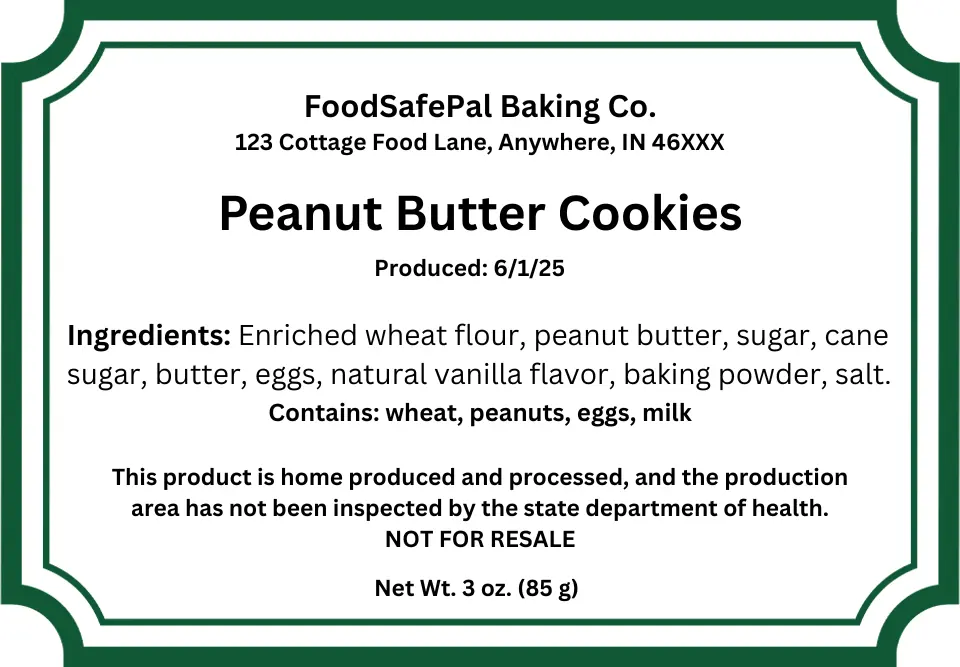
Examples of home-based vendor foods
We are a producer market. This means there is a requirement that all produce must be grown by a vendor with the exception of produce not able to be grown locally and pantry stock items.
This list is not all inclusive.
| Food Type | Examples Allowed | Examples Prohibited |
| Baked Goods | Cookies, cakes, fruit pies, cupcakes, bars, yeast breads, fruit breads, baguettes | Foods that contain meat, poultry, aquatic animals, non-baked dairy (cheese, butter, yogurt), non-baked egg containing products and whole eggs. Cheesecakes, quiche, or other bakes items needing refrigeration. |
| Candies and Confections | Caramels, chocolate, fudge, peanut brittle, chocolate covered fruits, buckeyes, chocolate covered nuts | |
| Fruit and Vegetables | Unprocessed, whole and uncut fruits and vegetables such as strawberries, blueberries, corn, lettuce, green beans, peppers, etc. Fruit-based jams and jellies2 (made from strawberries, blueberries, grapes, raspberries, blackberries, etc. with sugar only) Microgreens Apple Butter2 Persimmons and frozen persimmons pulp. Various freeze-dried & dehydrated fruits2 Fruit juice2 drinks or ice pops | Canned products that are shelf-stable and in hermetically sealed containers such as salsas, chutney, chow-chow, and canned vegetables. Cut tomatoes and cut melons. Garlic in oil mixtures, herbs and oil mixtures. Raw seed sprouts. (e.g., alfalfa sprouts) Pickled vegetables (beets, pickles). Fruit butters and Low acid jellies (e.g., pumpkin, jalapeño. Except apple butter.) Freeze-dried & dehydrated tomatoes & melons Most acidified foods (salsa, etc.) cannot be sold by home-based vendors. |
| Meat, Poultry, Eggs, and Seafood | Frozen meats1 Fresh chicken eggs4 Frozen poultry3 & rabbits Live fish Quail or duck eggs5 | Canned products that are shelf-stable and in hermetically sealed containers such as canned vegetables, canned meats, and canned seafood. |
| Tree nuts and legumes | Peanuts, almonds, cashews, walnuts, pistachios, etc. nut butters | nut butter must not contain any TCS foods |
| Beverages | Carbonated beverages Unadulterated juices from acidic fruits and vegetables1,2 | Juices from low acid fruits and vegetables Kombucha Cold brew coffee |
| Syrups, Dressings, Vinaigrettes | Honey, molasses, sorghum, maple syrup Acidified vinaigrettes or dressings1 | Please see footnotes on those “allowed.” |
- A permit or approval is required by Indiana and/or the Dubois County Health Department.
- Must have a pH <= 4.6 and Aw > 0.85.
- Less than 1,000/year
- Requires ISEB Permit. Visit https://ag.purdue.edu/ansc/iseb/
- Does not require ISEB. Contact DNR for necessary licenses
- Awaiting response from heath department